888-258-7913



Quilters are a dedicated bunch. Being away from a project for too long has a way of making even the most relaxed vacation feel a little incomplete. Whether you want to totally disconnect from screens and go analog, or you just can’t imagine sitting on a long flight with nothing to stitch, here are practical tips for traveling with your quilting projects no matter how you’re getting there.
Quilting on a Plane: What TSA Allows
Air travel is the most restrictive way to go when it comes to packing quilting supplies, but there’s more latitude than you might expect. TSA’s website states that needles for knitting, sewing and needlepoint are permitted in both carry-on and checked bags. Great news for hand stitchers who want to keep busy during a flight.
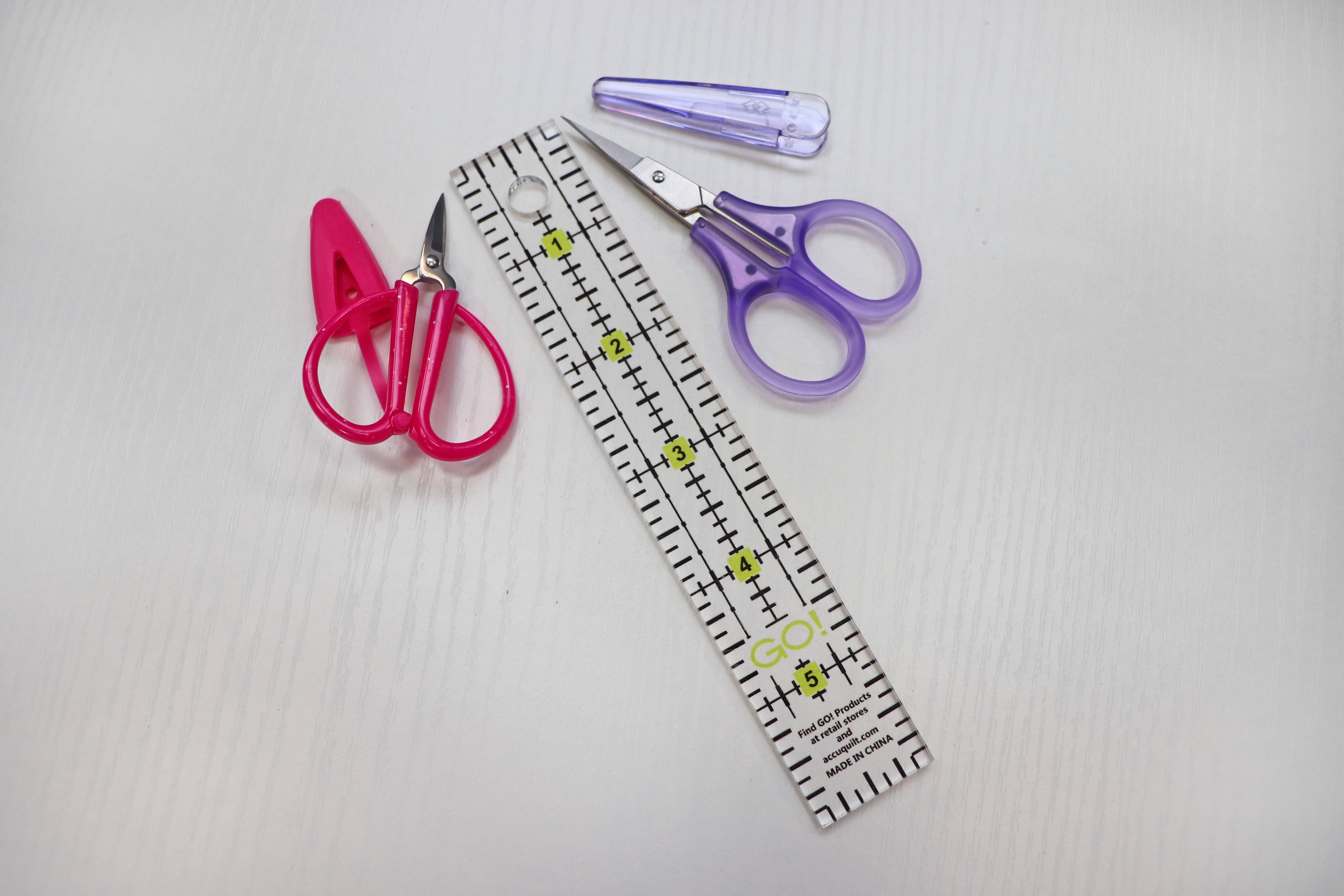
Scissors are allowed in carry-ons as long as the blade is shorter than 4” from tip to pivot point. That said, avoid packing your favorite scissors in a carry-on. Travel scissors with an attached blade sheath are effective, inexpensive and easy to replace if they get confiscated. A small folding pair on a lanyard is another good option as they’re hard to drop and easy to find.
Travel Tip #1: Bring more than one needle. Losing your only needle at the start of a long flight with an English Paper Piecing project is a memorable lesson learned the hard way.
Travel Tip #2: Pack dental floss in your carry-on for emergency thread cutting. The tiny blade in the floss cutter will snip thread in a pinch and no one will ever question your floss.
Can You Bring a Rotary Cutter on a Plane?
No. Rotary cutters are not permitted in carry-on bags. If you need one at your destination, pack it in checked luggage or plan to pick one up when you arrive.
What to Pack in Your In-Flight Project Bag
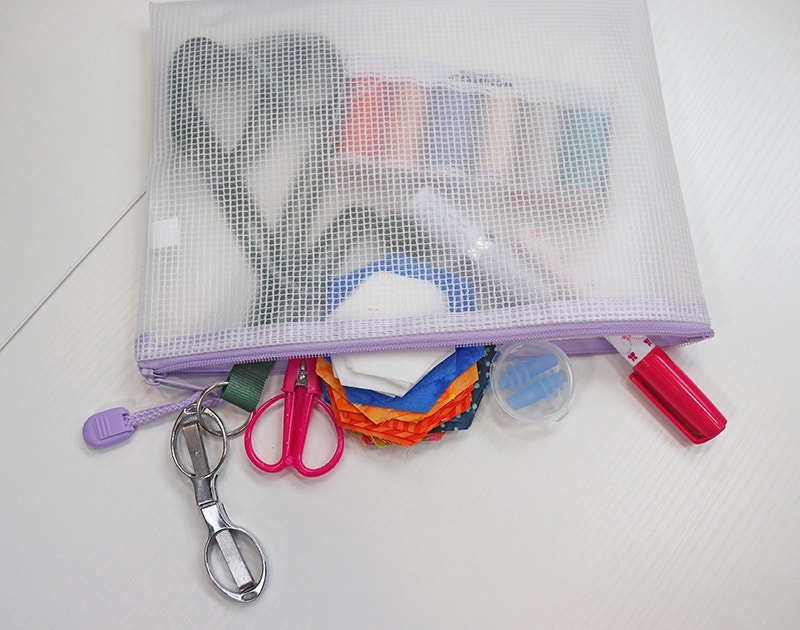
Organization matters when you’re flying. Keep your travel projects in one or two small zipper bags that fit easily in the seatback pocket. Beyond the project itself, here’s what to add to stay comfortable and prepared:
- Tissue packet
- Lip balm
- Pressure-relief ear plugs
- Earbuds
- Neck light
- Phone charger (for longer flights)
- E-reader (even quilters need options)
Travel Tip #3: Keep your needles and small scissors in a tiny tin with a needle minder. The magnet is a lifesaver if you drop a needle mid-flight. Tuck in a couple of binding clips while you’re at it.

Travel Tip #4: If stitching on the plane isn’t practical, use flight time to research projects, save patterns or watch technique videos as most flights have Wi-Fi.
What’s the Best Quilting Project to Take on a Plane?
Size is everything when flying. For that reason, English Paper Piecing is the single best hand-sewing project for air travel. It’s compact, self-contained and completely scissors-optional once your pieces are prepped. All you need is a small zipper bag of templates and fabric with a fabric glue stick, and you can glue-baste your way through an entire flight.
AccuQuilt has a full lineup of GO! English Paper Piecing dies that cut both fabric and templates with precision so you can prepare a trip’s worth of pieces before you leave home. If you’re not familiar with English Paper Piecing, it’s a hand-sewing technique where fabric is basted around a small template and shapes are joined by hand. Traditionally done with card stock and hand basting, it’s just as effective with a stabilizer template and fabric glue—and much faster to get started.
Another good option for air travel is hand quilting a small wall hanging or baby quilt. Keep it small, size and bulk are the limiting factors in the seat.
-
 GO! English Paper Piecing Hexagon-1" Finished Sides DieSpecial Price $69.99 Regular Price
$84.99You Save $15.00 -
 GO! English Paper Piecing Jewel Petal-1" Finished Sides DieSpecial Price $69.99 Regular Price
$84.99You Save $15.00 -
 GO! English Paper Piecing Die BundleSpecial Price $135.99 Regular Price
$160.97You Save $24.98
Can You Bring a Sewing Machine on a Plane?
Yes, with some planning. Quilters travel with their machines regularly, particularly for retreats and extended trips. Check with your specific airline before you go as policies vary and can change at any time. The machine needs to fit in a secure bag that slides under the seat or into the overhead bin. If you check it instead, use a hard-sided suitcase with the machine well-padded using the original foam or clothing to minimize movement and damage in transit. Watch the weight limits; overages can be costly.
For retreat travel, it’s worth checking whether machines are available to rent or borrow at your destination. If you’ll be away for an extended period, picking up an inexpensive used machine when you arrive, and reselling it before you leave, is a practical option some quilters swear by.
Can You Sew on a Cruise Ship?
Sewing machines are generally permitted on cruise ships but must be used only in your cabin and plugged directly into a wall outlet—not an extension cord or surge protector. Because machines are heat-producing electrical items, check with your specific cruise line before you pack one.
A simpler option: seek out a dedicated quilting cruise. Many quilt shops organize trips with onboard instructors, projects and machines provided so you just show up and stitch. Quilting cruises cover a wide range of destinations and skill levels and tend to fill up fast, so booking early matters.
Road Trip Quilting: Packing Your Full Setup
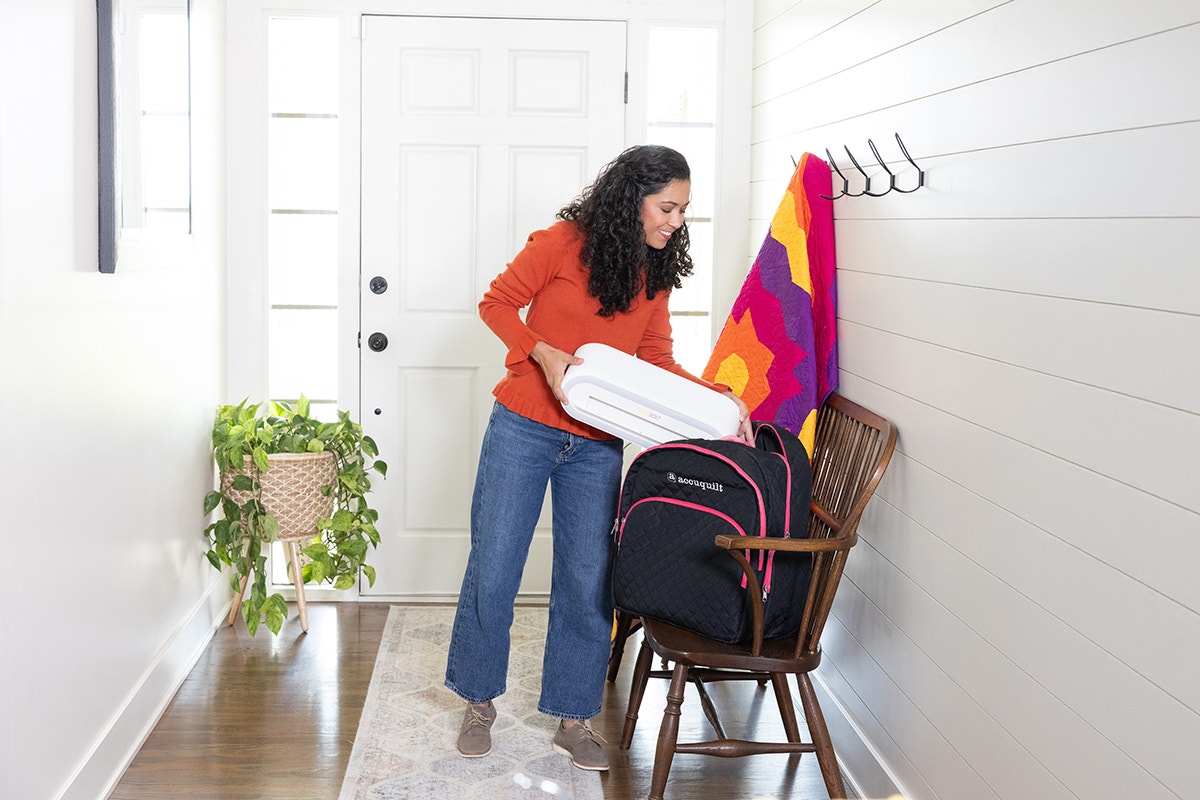
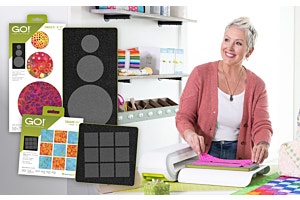
Heading out by car opens up a lot more flexibility. Depending on your destination, you may want to bring your full setup: sewing machine, iron, pressing surface, folding table, power strip, a good light, scissors, pins, thread, clips, fabric cutter, mat and ruler. If you’re not cutting from pre-cuts, add your GO! cutter and dies.
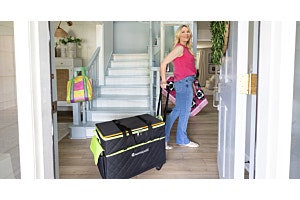
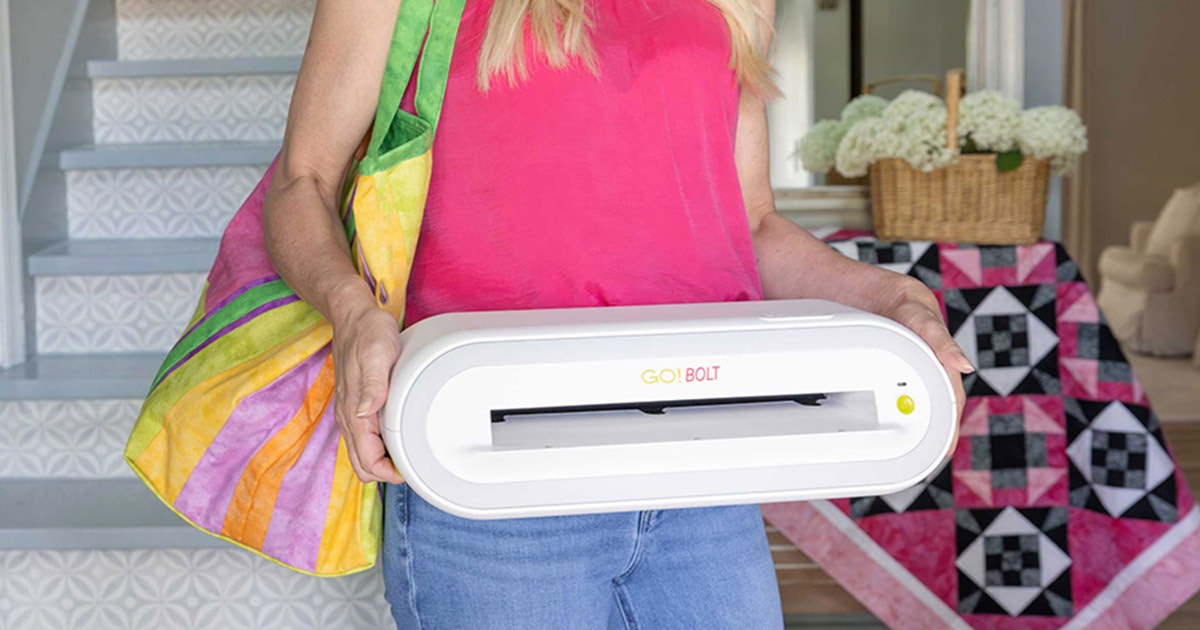
The GO! Bolt is the ideal road trip cutting companion. It weighs under 10 lbs, has a small footprint, and fits neatly in the AccuQuilt Backpack alongside GO! Bolt Die Catchers, a power cord, a handful of dies and your fabric. The GO! Bolt Battery Pack—certified for air travel and available exclusively here or your local AccuQuilt retailer—means you can cut at a campground, a cabin, or anywhere else without hunting for an outlet. A fully charged Battery Pack delivers up to 7 hours of cutting time, making it a genuinely versatile travel companion for quilters on the move.
-
 GO! Bolt™ On-the-Go Starter PackSpecial Price $579.99 Regular Price
$719.96You Save $139.97 -
 GO! Bolt™ Battery PackSpecial Price $99.99 Regular Price
$114.99You Save $15.00


Frequently Asked Questions About Traveling with Quilting Supplies
Can you bring sewing supplies on a plane?
Yes. TSA permits sewing, knitting and needlepoint needles in both carry-on and checked bags. Scissors with blades shorter than 4” from tip to pivot point are allowed in carry-ons. Rotary cutters are not permitted in carry-ons and must be packed in checked luggage. For the most current rules, check the TSA website at tsa.gov or your airline’s baggage policy.
Can you bring a rotary cutter on a plane?
No. Rotary cutters are not allowed in carry-on bags. Pack them in checked luggage, or plan to purchase or borrow one at your destination.
What is the best quilting project to take on a plane?
English Paper Piecing is widely considered the best hand-sewing project for air travel. It’s compact, requires no cutting once pieces are prepped, and can be worked entirely by hand in a small space. AccuQuilt GO! English Paper Piecing dies let you cut precise fabric and paper templates before you leave home.
Can you bring a sewing machine on a plane?
Yes, in most cases. Your machine needs to fit in a secure bag that meets carry-on size restrictions, or it can be checked in a hard-sided, well-padded suitcase. Policies vary by airline, so confirm before you travel. Weight restrictions apply to checked bags, so lighter machines travel more economically.
Can you sew on a cruise ship?
Generally yes, in your cabin only, plugged directly into a wall outlet. No extension cords or surge protectors are typically permitted. Check with your specific cruise line before packing a machine. Alternatively, look for a dedicated quilting cruise where machines and materials are provided onboard.
Is the GO! Bolt Battery Pack TSA approved for air travel?
Yes. The GO! Bolt Battery Pack is certified for air travel and can be packed in your carry-on. It delivers up to 7 hours of cutting time on a full charge and is available exclusively through local AccuQuilt retailers.
Can you pack a GO! Bolt cutter in checked luggage?
Yes. Pack the GO! Bolt in hard-sided luggage with adequate padding to prevent shifting in transit.
How should you pack GO! Dies for travel?
For checked luggage, place a layer of protective cardboard between dies, especially if they’re not in their original packaging. For carry-ons, check TSA guidelines—dies with exposed blades may need to be checked.
Where can I find quilting cruises?
Start with your local quilt shop—many organize group trips. You can also search online for quilting cruises, which range widely in destination, price and focus. These trips book up quickly, so planning well in advance is recommended.
Where can I find travel-friendly sewing supplies?
Your local quilt shop or needlepoint store is a great first stop. Travel scissors, needle cases, project bags and compact accessories are commonly stocked items, and staff can often point you toward what travels best.
Take Your Quilting Further
Whether you’re boarding a plane, loading up the car, or setting sail, there’s a way to keep your project moving. We’d love to see where your quilting travels take you—share your on-the-go projects with AccuQuilt on social media or in the Under the Needle with AccuQuilt Facebook group.