888-258-7913



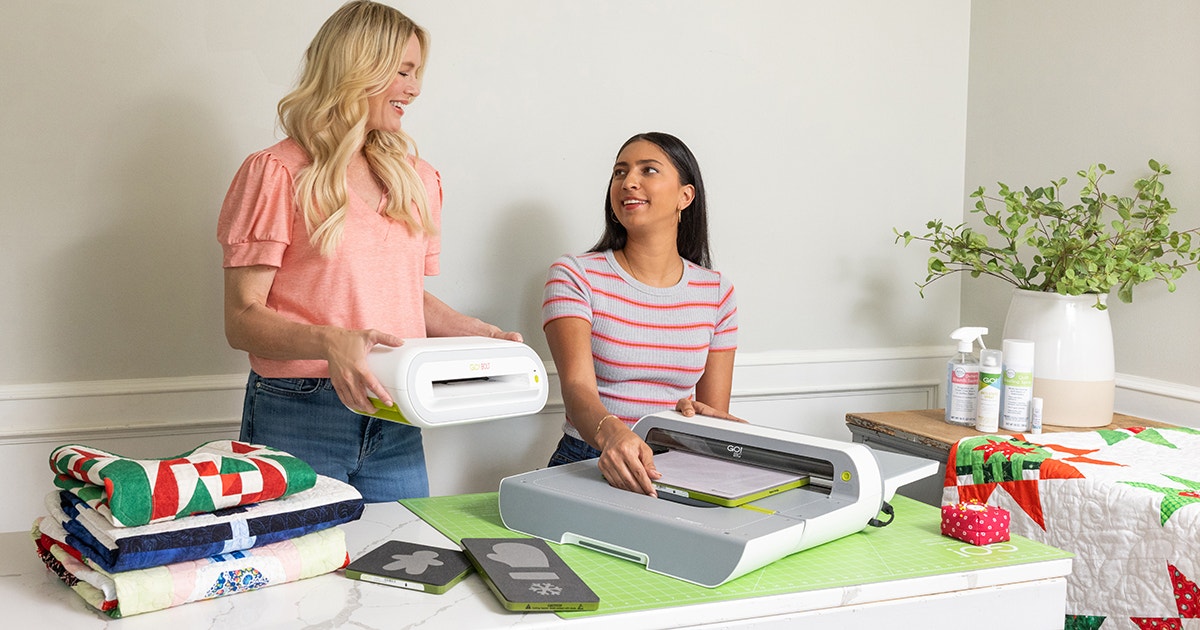
Every craft has its own language, and quilting is no exception. If you’ve ever found yourself nodding along at a quilt shop while quietly wondering what a jelly roll actually is, this glossary is for you. We’ve pulled together 50 essential sewing and quilting terms, from basic fabric vocabulary to quilting-specific techniques, with definitions designed to be brief, clear and easy to remember. We’ve also included nine bonus terms at the end that every quilter eventually learns (and loves).
Fabric Terms
1. Selvage edge: The tightly woven, finished edges that run lengthwise along both sides of a fabric to prevent fraying. One selvage often includes manufacturer details and color registration marks for printed fabrics.
2. Width of Fabric (WOF): The measurement across a piece of fabric from selvage edge to selvage edge.
3. Lengthwise grain: The tightest grain direction of a fabric, running parallel to the selvage edge. If the selvage has been cut off, tug the fabric in both directions—the direction with the least stretch is the lengthwise grain.
4. Bias: The direction of fabric with the most stretch, running at a 45-degree angle to the selvage edge. Bias-cut pieces are more flexible and prone to stretching, which can be an advantage or a challenge depending on the project.
5. Weave: How the fibers in a fabric are interlocked together. The weave of a fabric affects its strength, stretch, drape and how it behaves when cut and sewn.
6. Fan fold: A method of folding fabric back and forth in accordion-style layers, often used when cutting multiple layers at once.
7. Raw edge: An unfinished fabric edge that has not been hemmed, serged or otherwise secured against fraying.
8. Yardage: Fabric measured and sold by the yard along the selvage edge, as it comes off the bolt.
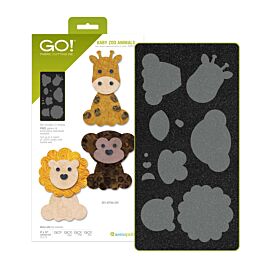
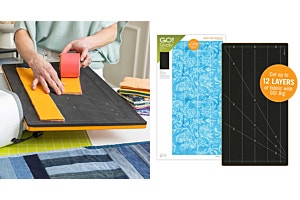
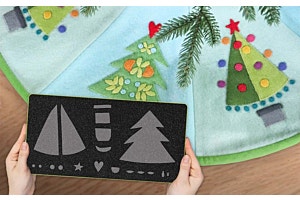
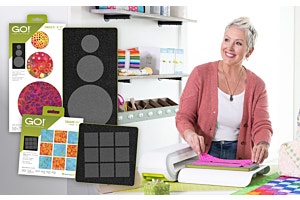
9. Pre-cut: Fabric that has already been cut to a specific size before purchase. Pre-cuts save time and are especially useful for quilters who want to skip the measuring and cutting steps. AccuQuilt GO! Dies let you cut your own pre-cuts quickly and accurately from any fabric you choose.
10. Fat quarter: A quilter’s standard unit of fabric: a half-yard cut divided down the center to yield a more useful shape. A fat quarter measures approximately 18” x 22”, compared to a standard quarter yard of 9” x 44/45”.
11. Fat eighth: A quarter-yard cut of fabric divided in half, measuring approximately 9” x 22”, compared to a standard eighth yard of 4.5” x 44/45”.
12. Jelly roll: A pre-cut fabric bundle consisting of 2½” x width-of-fabric strips, typically 42 per roll and all from the same fabric collection, giving quilters a coordinated assortment of prints and colors. “Jelly roll” is a term used by Moda Fabrics; other brands use names like strip rolls.
13. Charm pack: A pre-cut fabric bundle of 5” squares, typically 42 per pack, all from the same fabric collection. “Charm pack” is a term used by Moda Fabrics.
14. Layer cake: A pre-cut fabric bundle of 10” squares, typically 42 per stack, all from the same fabric collection. “Layer cake” is a term used by Moda Fabrics.
Sewing Machine Parts and Terms
15. Bobbin and bobbin case: A bobbin is a small spool wound with thread that forms the bottom half of a machine stitch. It fits into the bobbin case, which holds it in place beneath the needle plate.
16. Throat: The open area of a sewing machine between the needle and the upright body of the machine to the right of the stitching area. A longer throat, called a “throat space,” gives you more room to maneuver larger quilts.
17. Presser foot: The attachable foot that lowers onto fabric to hold it in place and help it advance evenly through the machine as you sew. Different presser feet are designed for different tasks.
18. Feed dogs: The metal teeth located beneath the needle in the throat plate that grip and advance fabric forward through the machine as it is stitched.
19. Decorative stitch: Any machine stitch other than a straight stitch. The most common decorative stitch is the zigzag, but modern machines offer dozens of options including blanket stitch, satin stitch and more.
20. Embroidery machine: A specialized sewing machine capable of stitching digitized designs onto fabric held in a hoop. Embroidery machines read digital design files in a specific format, loaded via USB, Wi-Fi or cable. Some models also function as standard sewing machines.
21. Quarter-inch foot: A specialized presser foot used by quilters to sew an accurate ¼” seam allowance, the standard for most quilt blocks. The foot is aligned so the right edge of the fabric lines up with the edge of the foot, placing the needle exactly ¼” from the raw edge.
Sewing Terms
22. Backstitch: Two to three reverse stitches sewn at the beginning or end of a seam to lock the thread and prevent the seam from unraveling.
23. Seam allowance: The distance between the raw edge of the fabric and the line of stitching. The standard seam allowance in quilting is ¼”.
24. Seam: The line of stitching that joins two pieces of fabric together.
25. Seam ripper: A small tool used to remove unwanted stitches without damaging the surrounding fabric.
26. Notch: A small cut or mark used to align fabric pieces correctly before sewing, most commonly used when joining curved pieces. GO! Dies simplify curved piecing by cutting alignment notches into the fabric automatically.
Quilting Terms
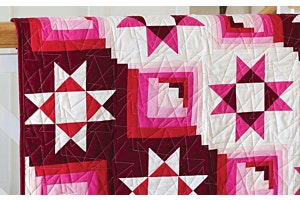
27. Half Square Triangle (HST): A fundamental quilting unit made by sewing two right-triangle pieces of fabric together along their diagonal edge to form a square. Half square triangles appear in hundreds of quilt block designs.
28. Quarter Square Triangle (QST): A quilting unit made from four triangles sewn together to create a square. Quarter square triangles are used in a wide range of traditional and modern quilt blocks.
29. Unfinished size / cut size: The size of a quilt piece or block before it is sewn into the final project. The unfinished size includes the seam allowance on all sides.
30. Finished size: The size of a quilt piece or block after all four sides have been sewn into the surrounding project and the seam allowances are taken up.
31. Press: Using an iron to set a seam open or to one side. Unlike typical ironing—which uses a back-and-forth gliding motion—pressing uses an up-and-down motion to avoid distorting the fabric.
32. Quilt sandwich: The three-layer construction of a quilt: the finished quilt top, a layer of batting, and the backing fabric. The sandwich is held together by quilting stitches.
33. Binding: A strip of fabric folded and stitched around the perimeter of a finished quilt sandwich to enclose and protect the raw edges.
34. Bias binding: Binding cut along the bias grain of the fabric, which gives it stretch and strength—making it the preferred choice for finishing quilts with curved edges.
35. Basting: A method of temporarily holding quilt layers or fabric pieces together in preparation for final stitching. Basting can be done with long, loose hand stitches, safety pins, spray baste, or a combination of methods.
36. Fussy cut: Cutting a piece of fabric so that a specific part of the print—a motif, a face, a design element—is deliberately centered or placed within the cut piece.
37. Longarm quilting: A method of quilting in which the quilt layers are loaded onto a large frame and remain stationary while a large machine moves across the surface, stitching the layers together in decorative patterns.
38. Free motion quilting: A quilting technique in which the quilter moves the fabric freely under the needle while the machine stitches, creating custom designs. It can be done on a standard sewing machine, mid-arm, or longarm. Think of it as drawing a picture by moving the paper instead of the pencil.
39. Rotary cutter: A cutting tool with a sharp, round rolling blade mounted in a handle—similar in appearance to a small pizza cutter. Used with a quilting ruler and cutting mat to cut fabric accurately.
40. Quilting ruler: A clear acrylic ruler, available in a wide range of shapes and sizes, used with a rotary cutter and mat to measure and cut fabric accurately.
41. Rotary cutting mat: A self-healing cutting mat placed under fabric when cutting with a rotary cutter. It protects both the blade and the table surface.
42. Quilt: A textile made of three layers—a pieced or whole-cloth top, a layer of batting and a backing—stitched together and finished with binding. (Important note: do not refer to a quilt as a blanket.)
43. Quilting: The act of stitching together the three layers of a quilt sandwich, either by hand or machine.
44. Batting / Wadding: The middle layer of a quilt sandwich, providing warmth and loft. Batting is most commonly made from cotton, wool, polyester or a blend. An 80/20 cotton-polyester blend is one of the most popular options for its combination of softness and ease of quilting.
45. Stitch in the ditch: A quilting method in which stitches are sewn directly into the “ditch”—the slight groove created by a seam—making the quilting stitches nearly invisible from the front.
46. Echo quilting: A quilting method in which lines of stitching are sewn around a shape or design element at a consistent distance—typically ¼”—radiating outward in repeating rings, like ripples in water.
47. Stash: A quilter’s personal collection of fabric that has not yet been cut and used in a project. The stash is considered a point of pride.
48. Scrap: Fabric left over after cutting pieces for a specific project. Scraps vary in size and are often saved and incorporated into future projects.
49. RST —Right Sides Together: An instruction to place two pieces of fabric face-to-face before sewing, so the finished side of each piece faces inward, and the seam is hidden when the work is turned right-side out.
50. WST — Wrong Sides Together: An instruction to place two pieces of fabric back-to-back before sewing, so the finished sides of both pieces face outward.
Bonus: Quilting Acronyms and Terms Every Quilter Learns Eventually
Quilters have developed their own shorthand for the realities of the hobby. If you spend any time in a quilt shop, guild meeting, or online quilting community, you’ll encounter these:
WIP — Work in Progress: any project currently in progress
UFO — Unfinished Object: a project that has been started but not yet completed
PHD — Project Half Done
TBQ — To Be Quilted: a pieced top waiting to become a full quilt sandwich
PIGS — Projects in Grocery Sacks: fabric and supplies gathered for a project, bagged and waiting
WOMBAT — Waste of Money, Batting and Time
HIPS — Hundreds of Ideas Piling Skywards
STABLE — Stash Accumulation Beyond Life Expectancy
Frogging — Un-sewing a seam: named for the sound it requires “rip-it, rip-it, rip-it”
That covers the essentials, enough to hold your own at any quilt shop, retreat or guild meeting. Got a favorite term we missed, especially one of the funny ones? Share it with the accuquilt.livemunity on social media or in the Under the Needle with AccuQuilt Facebook group.